
Critical Discourse Analysis In Times Of War: Methodological Reflections On Studying Ongoing Conflict

When conflict unfolds in real time, language does not merely describe events; it actively participates in shaping their meaning. Headlines circulate before facts settle. Casualty figures are framed before responsibility is agreed upon. Terms such as retaliation, clash, terror, or self-defence become interpretive anchors long before public consensus emerges.
It is in such moments that Critical Discourse Analysis (CDA) becomes particularly necessary, and particularly difficult.
My doctoral research examines Western media representations of the 2024 Gaza crisis. Rather than evaluating the factual accuracy of coverage, my work investigates how meaning is constructed linguistically and discursively: how agency is assigned, how legitimacy is implied, and how certain geopolitical narratives become naturalised through routine reporting.
This blog post outlines some of the methodological and theoretical foundations guiding that work.
What does CDA actually do?
CDA is often misunderstood as simply “criticising language.” In fact, it is an approach to studying how discourse (language in use) relates to power, ideology, and social inequality.
In practical terms, CDA asks questions such as:
Who is represented as acting, and who is represented as being acted upon?
How are causes and consequences framed?
Which voices are foregrounded, and which are backgrounded or absent?
What assumptions about legitimacy or morality are embedded in word choice?
These are not stylistic curiosities. They are analytical tools for understanding how discourse contributes to shaping public perception and political possibility.
The importance of agency
One of the most significant analytical categories in my work is agency.
In linguistic terms, agency refers to who is portrayed as performing an action. For example, compare:
“Airstrikes killed 50 people.”
“50 people died in airstrikes.”
The second sentence removes the explicit actor. Such grammatical patterns are not inherently manipulative, but when recurrent across coverage, they may systematically shift responsibility or soften attribution.
By examining patterns of active and passive constructions, transitivity (who does what to whom), and nominalisation (turning actions into abstract nouns like violence or escalation), CDA helps reveal how accountability can be distributed unevenly.
Legitimacy and framing
Another central concern is the discursive construction of legitimacy.
Legitimacy in media discourse often emerges subtly through:
Lexical choice (e.g., “retaliation” vs “attack”)
Attribution structures (who is quoted as authoritative)
Contextualisation (which historical background is included or excluded)
Evaluative language (implicit moral positioning)
These linguistic and discursive features contribute to what might be called a “moral architecture” of reporting. They help establish which actions appear justified, which appear excessive, and which actors are framed as rational or irrational.
Importantly, CDA does not assume bias in advance. Instead, it investigates patterned representation across a corpus of texts to determine whether systematic tendencies emerge.
The socio-cognitive dimension
My research is grounded primarily in the socio-cognitive approach to CDA, associated with scholars such as Teun A. van Dijk. This approach links textual analysis with social cognition. That is, the shared mental models and ideological frameworks that guide interpretation.
According to this view, discourse both reflects and shapes collective understandings of events. When media repeatedly frame conflict through particular narrative templates, those templates can become taken-for-granted interpretive schemas for audiences.
For example, if reporting consistently constructs one side as reactive and the other as initiating, this pattern may contribute to a stable cognitive model in which causality is pre-structured before facts are evaluated.
The socio-cognitive approach thus connects micro-level linguistic detail with macro-level ideological reproduction.
The challenge of studying ongoing conflict
Studying discourse during an active and deeply asymmetrical conflict presents particular methodological challenges.
FIRST, the material conditions on the ground are not symmetrical, and this asymmetry often becomes obscured in media representation. When one actor possesses overwhelming military, political, or institutional power, the language used to describe actions, responses, and consequences carries significant weight. Analytical work must therefore remain attentive to how discourse can normalise structural imbalance while presenting events as episodic or reciprocal.
SECOND, the pace of reporting during conflict compresses complexity. Headlines are written under urgency. Context is selectively condensed. Historical trajectories that shape present realities are often reduced to brief references or omitted altogether. This acceleration of narration affects how causality and responsibility are constructed.
THIRD, there is an ethical dimension to studying ongoing violence. The task of CDA is not to suspend moral judgement, nor to equate unequal actors, but to examine how discursive patterns structure public understanding. Analytical rigor requires that critique be demonstrated through systematic textual evidence rather than asserted in advance.
In this sense, reflexivity does not mean neutrality. It means methodological discipline: tracing how linguistic choices, framing devices, and narrative structures contribute to the reproduction—or contestation— of power relations within media discourse.
Beyond technical analysis
One recurring critique of CDA is that it can become overly focused on micro-linguistic features at the expense of broader context. This is a legitimate concern.
In my own work, I attempt to balance detailed textual analysis with attention to:
Institutional structures of media production
International political alignments
Historical background of the conflict
Audience positioning
In other words, there is “CDA,” and there is “CDA.” The difference lies in whether linguistic analysis is treated as an end in itself or as a gateway to understanding broader social dynamics.
Why this matters
Media discourse does not operate in a vacuum. It shapes diplomatic language, public debate, and policy framing. When certain patterns of representation become normalised, they influence which political actions appear thinkable and which appear unthinkable.
CDA does not claim to resolve conflict. But it offers tools for examining how language structures the field within which political and moral judgments are made.
In times of war, this analytical vigilance becomes not only academically relevant but socially necessary.
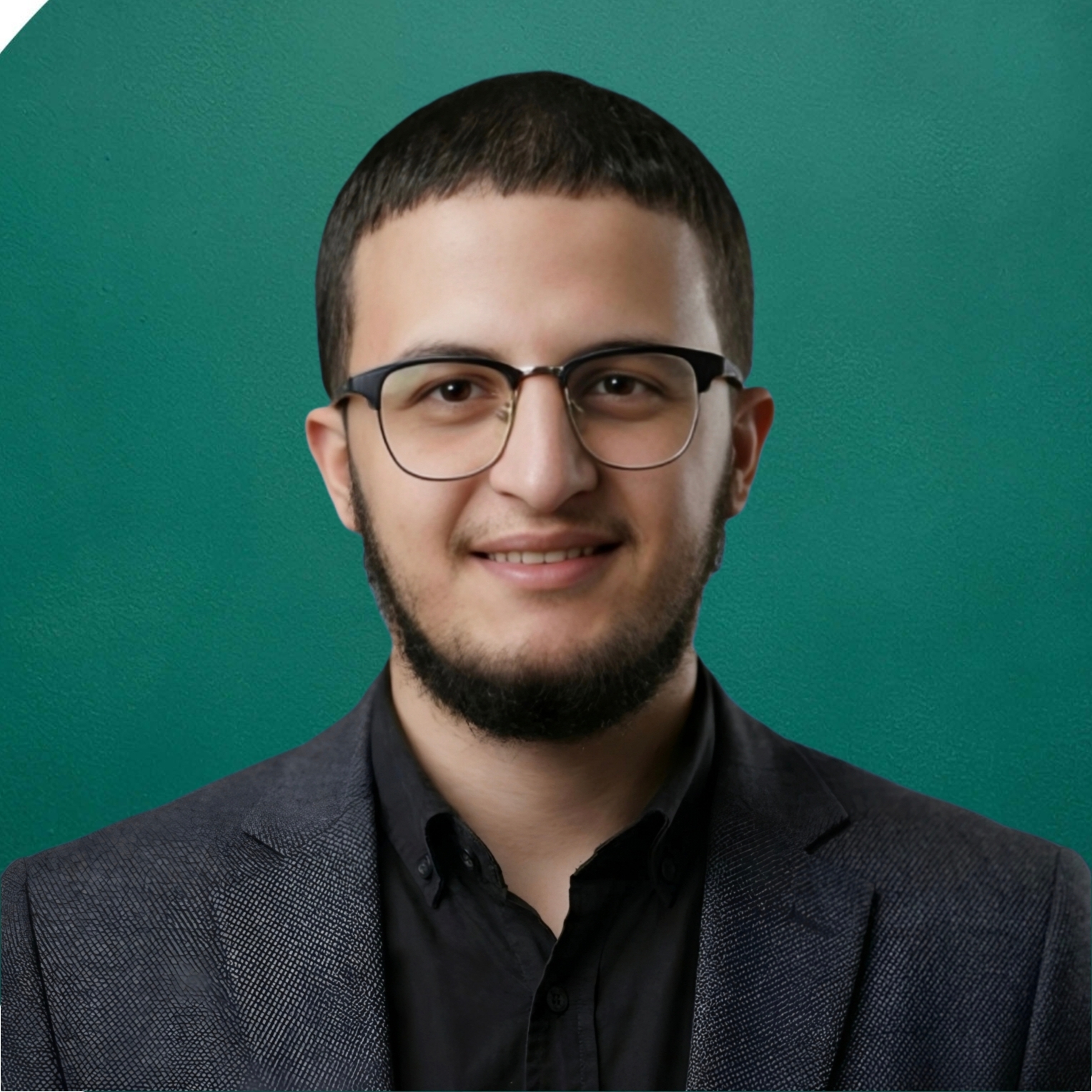
Mohamed Nacer Eddine Tioua is a PhD Candidate in Applied Linguistics at the University of Jijel https://www.linkedin.com/in/tiouamed


Comments